
Uncategorised
- Written by Steve Allanson
We usually cannot know what is going to happen tomorrow, next week, next month etc.
Of course when it comes to Supply Chain sometimes you can indeed have orders going forward some time, and have agreed lead-times to your customers equally long. In this case, for this period of time, you can indeed have some certainty. In most businesses, however, the time scale of this "certainty" is not sufficient to cover the duration of the business plan, indeed it is more usual for this time period to be quite short. In FMCG it can be a matter of days - if that.
In order to bridge the gap and be able to plan for the future of the business we therefore need to forecast what sales we are going to make.
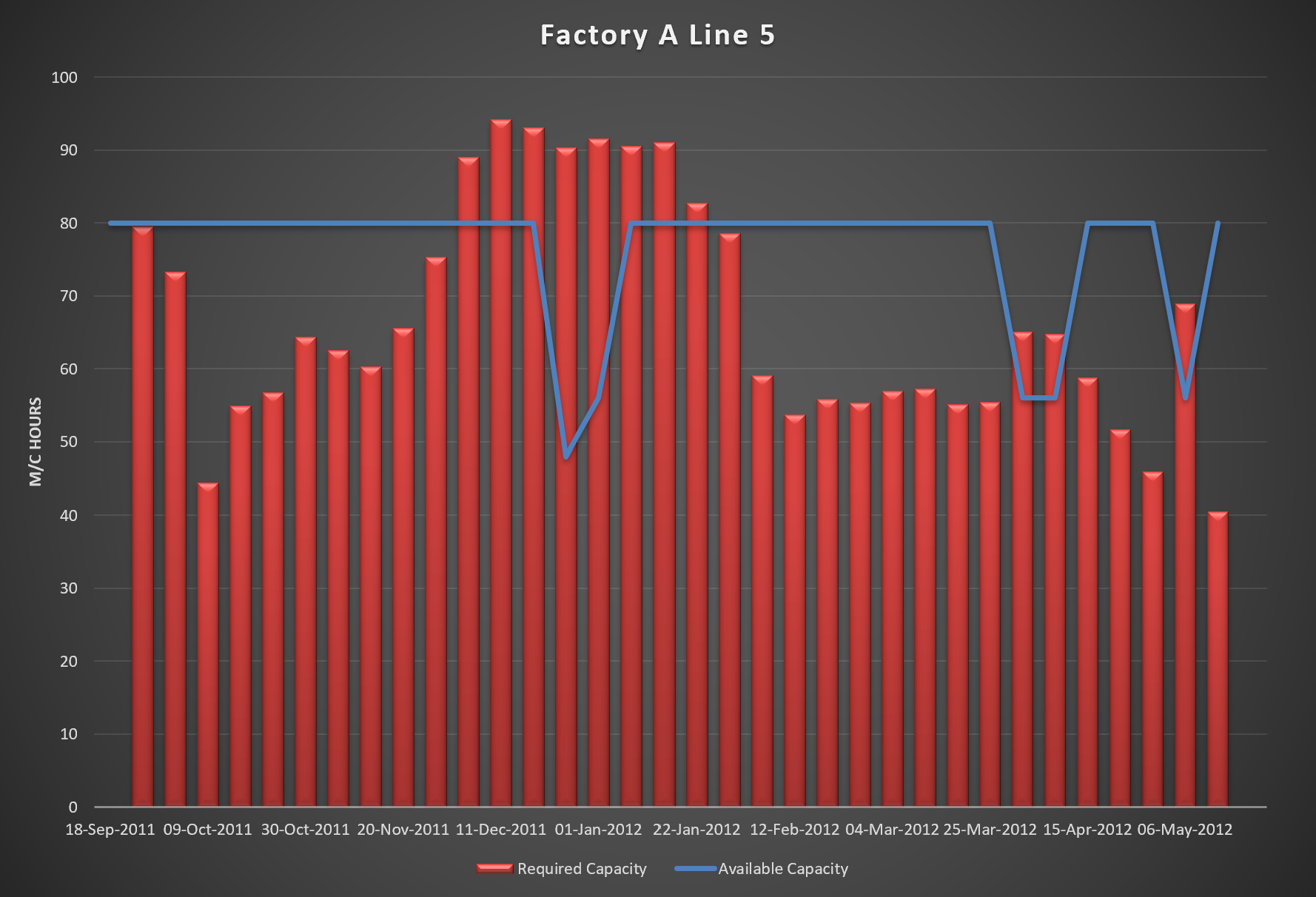
In many businesses the dynamics of the supply chain are also such that capacity needs to be balanced. It is true that these situations should be minimised as far as possible by the use of techniques such as Lean, SMED etc. but there remain a number of businesses where significant seasonality or promotion driven demand mean that it is not feasible to have sufficient instantaneous capacity to cope with the peak of demand. This can be exacerbated when the peak coincides with seasonal capacity lows driven by holidays etc.
Some obvious examples are
- Easter egg production
- Anything to do with Christmas
- Fashion/ seasonal clothing
But a surprising range of products are highly seasonal or have otherwise very variable demand patterns.
- Pies
- Gravy powder (The capacity chart below is just such a product)
- Furniture
- Cakes
- Shoes
- Car spares

Page 2 of 2
- You are here:
-
Home

- Uncategorised